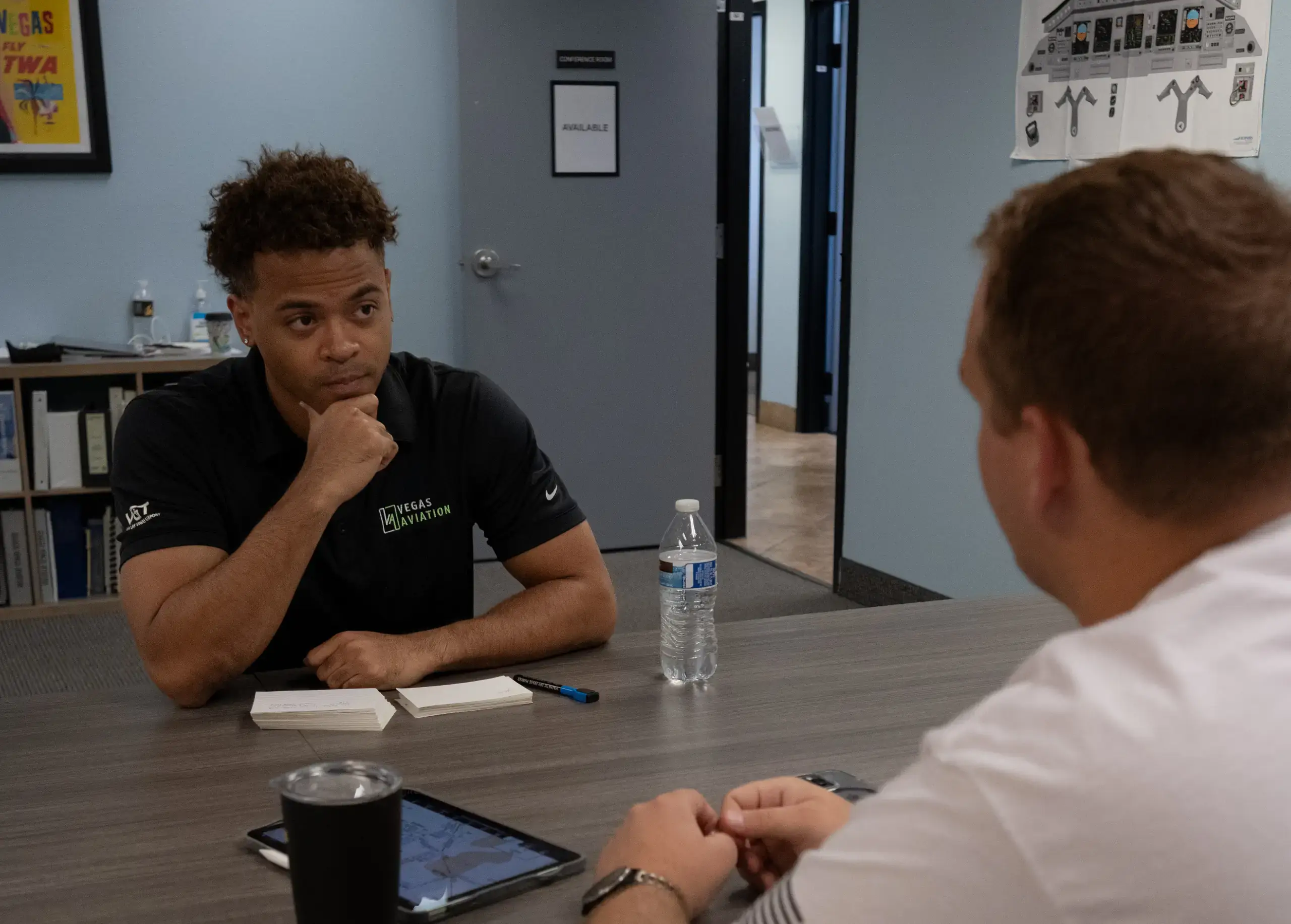
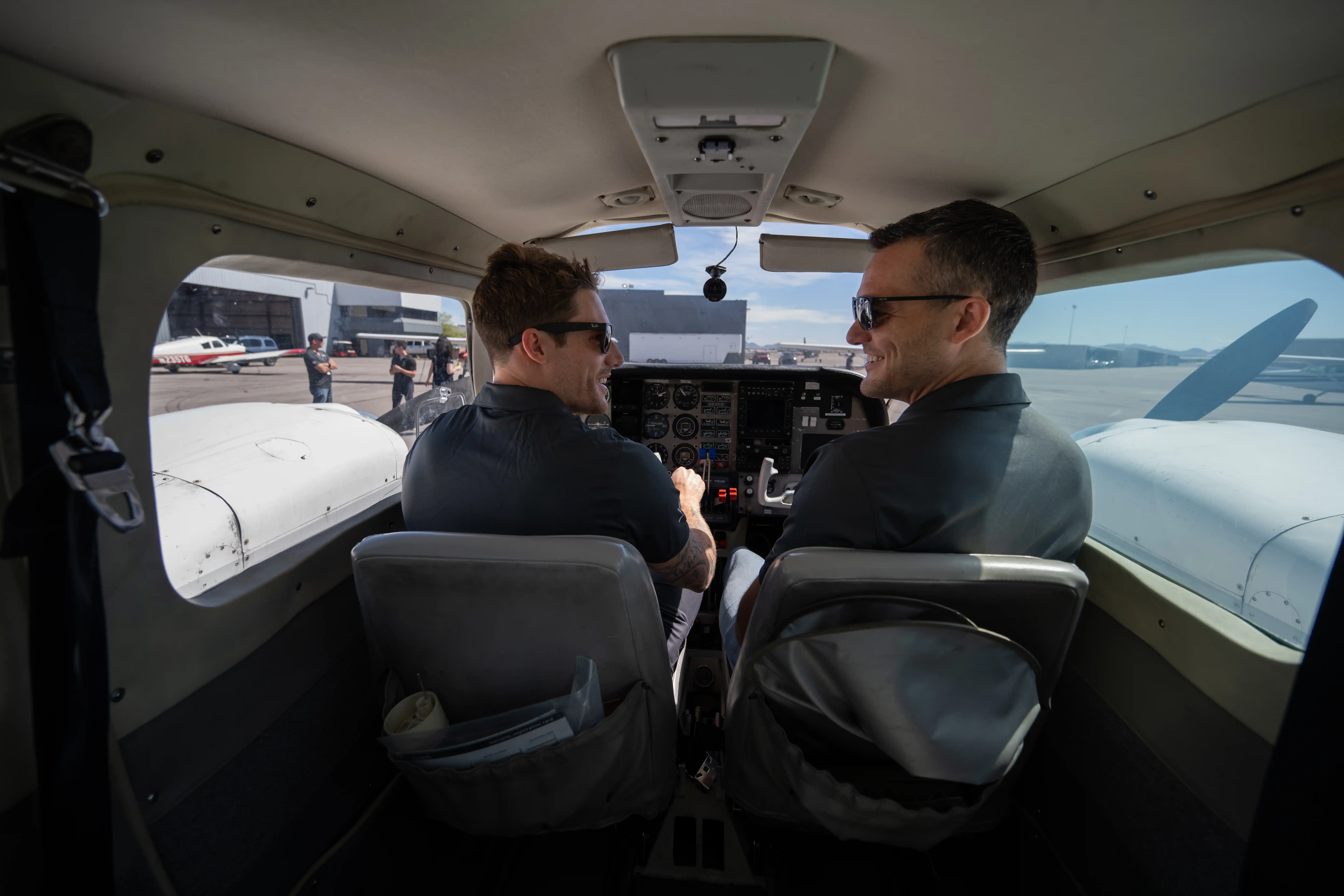
Student pilot and flight instructor training in an airplane cockpit

Private Pilot Flight Training

Earn Your Private Pilot Certificate in Las Vegas

Build the knowledge, aircraft control, judgment, and flight experience required to operate as pilot in command for personal flying and prepare for advanced ratings.

Choose the Right Starting Point

Who Private Pilot Training Is For

The first full certificate for personal flying and many professional training paths

Private Pilot training is designed for new and returning students who want to build the knowledge, judgment, and flight experience required to act as pilot in command. Your reason for learning to fly shapes the schedule, budget, and ratings you may pursue afterward.

Personal and recreational flyers

Earn the certificate for personal travel, recreational flying, or the satisfaction of becoming a pilot. Training develops the core skills needed to plan and conduct flights within private pilot privileges and limitations.

Career-minded beginners

Use the Private Pilot certificate as the first stage of a longer professional training path. Instrument, Commercial, and instructor training build on the knowledge and flight experience developed here.

Students with previous flight time

Bring your logbook and training records if you have already completed lessons elsewhere. An instructor can review your experience and discuss where your training should resume.

Prospective students still deciding

Start with a discovery flight if you want cockpit experience before enrolling. It provides an introductory lesson and time to ask questions about the Private Pilot path.

Share how you expect to use the certificate so our team can help you choose an appropriate starting point.

Discuss My Private Pilot Path

Start With the Right Documents

Private Pilot Training Prerequisites

Clear the administrative gates before they interrupt flight progress

Flight lessons may begin while you complete the early administrative steps. Solo flight and certificate issuance carry specific FAA requirements, so resolving documentation and medical questions early helps protect your training schedule.

Flight instructor and student reviewing private pilot ground school material

Eligibility for the certificate

For a Private Pilot License, you must be at least 17 and be able to read, speak, write, and understand English. You must also receive the required ground and flight training endorsements.

  • Age
    17 by certificate issuance
  • Language
    English proficiency required by 14 CFR 61.103
  • Testing
    Pass the FAA knowledge test and practical test

Before your first solo

A student pilot certificate, the applicable medical qualification, and instructor endorsements must be in place before solo flight. A third-class medical certificate is generally the relevant starting point for a student pursuing private pilot privileges.

  • Medical planning
    Read the FAA medical exam guide before meeting an Aviation Medical Examiner
  • Solo endorsement
    Earned after the required training and pre-solo knowledge test
  • Identity and eligibility
    Complete the school documentation required for training

Share your prior flight time, medical status, and dependable weekly schedule so our team can identify which requirement deserves attention first.

Review My Starting Point

A Milestone-Based PPL Path

From First Lesson to FAA Checkride

Progress follows demonstrated proficiency and instructor endorsements

Part 61 private pilot training at KVGT moves through connected proficiency milestones. Ground knowledge supports cockpit decisions, supervised practice leads toward solo flight, and later lessons prepare you for cross-country operations and the FAA checkride.

1. Ground and pre-solo preparation

Learn aircraft systems, regulations, weather, airspace, performance, navigation, and risk management while building the maneuvers and procedures required for safe solo flight.

  • Pre-solo knowledge
    Aircraft-specific rules, procedures, and limitations
  • Core flight skills
    Takeoffs, landings, slow flight, stalls, navigation, and emergency procedures

2. First solo and local consolidation

Your first solo follows an instructor endorsement after you demonstrate safe, consistent operation in the aircraft make and model. Solo practice then reinforces command decisions and aircraft control.

  • Instructor standard
    Safe and consistent performance before endorsement
  • Student responsibility
    Operate within every endorsement and weather limitation

3. Cross-country, night, and instrument-reference experience

The FAA aeronautical-experience requirements include cross-country, night, and instrument-reference training, plus specified solo cross-country experience for an airplane single-engine rating.

  • Planning
    Weather, fuel, performance, route, alternates, and airspace
  • Execution
    Navigation, communication, workload management, and diversion decisions

4. Knowledge test and checkride readiness

Pass the FAA knowledge test, close the identified knowledge gaps, and complete practical-test preparation. Review the oral and flight format in our Private Pilot checkride guide.

  • Minimum experience
    Part 61 airplane single-engine applicants need at least 40 flight hours, including the categories specified in 14 CFR 61.109(a)
  • Final endorsement
    Your instructor must find you prepared for the practical test

See how the milestones align with your calendar, study habits, and intended use of the certificate when you speak with the enrollment team.

Map My Training Path

Verified Program Estimate

Private Pilot Training Cost Breakdown

A planning estimate based on 62 flight hours and 2 simulator hours

We estimate a total cost of $17,285 with 62 flight hours and 2 simulator hours to complete private pilot training. Below is a breakdown explaining the separate training costs, use it as a planning baseline. Proficiency, additional flight time, repeated lessons, examiner fees, and future rate changes can change the final investment.

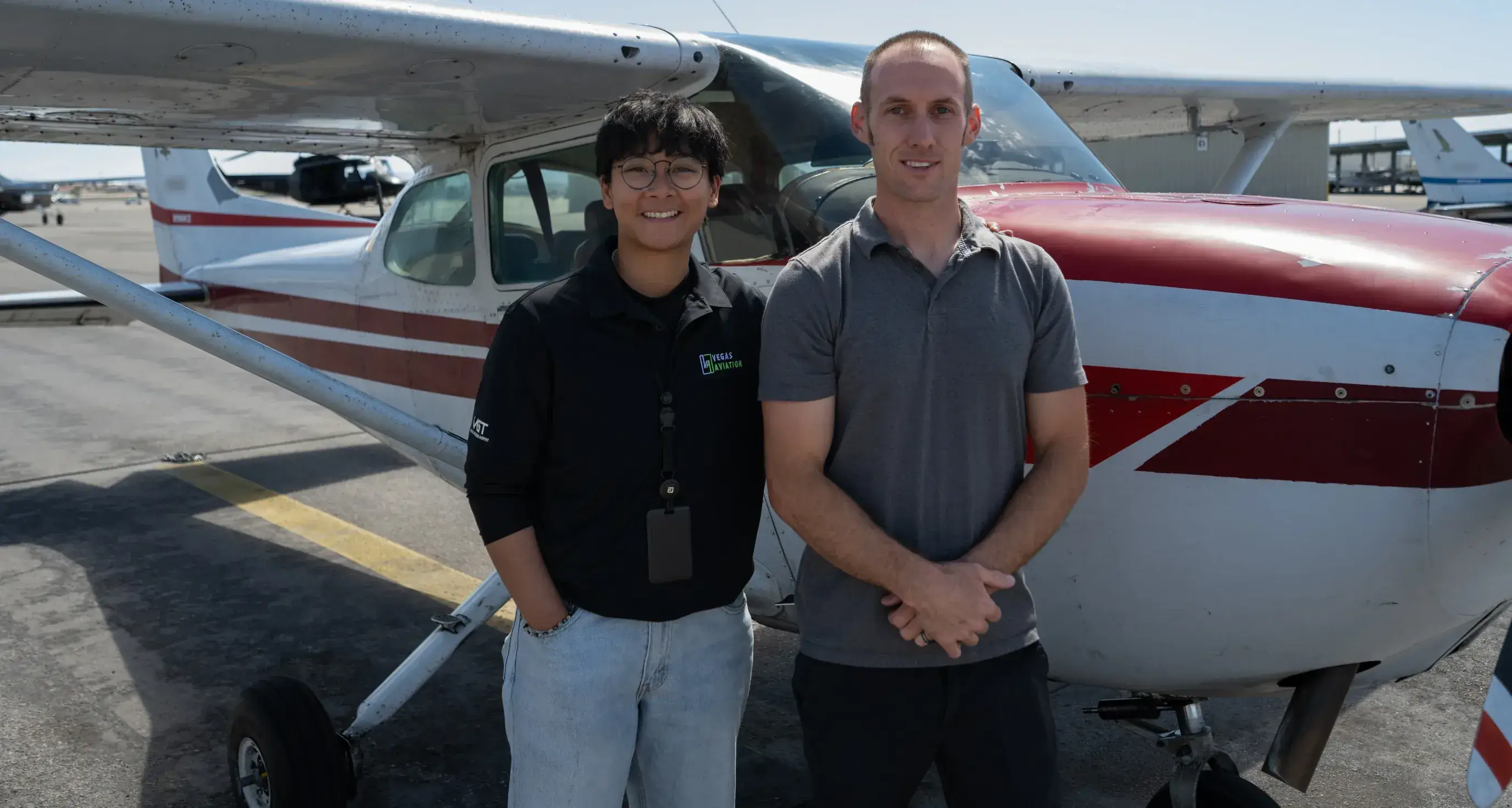
Private pilot student and flight instructor standing beside a training airplane

For informational questions about what changes PPL cost, read the Las Vegas private pilot cost guide. Then for a full professional training path compare our flight training programs and review the pricing page for a cost overview.

If funding is part of your planning process, compare the options and limitations described in our flight training financing resources before deciding how you will maintain training continuity.

  1. 50 hours dual instruction

    $11,750
  2. 10 hours solo practice

    $1,750
  3. 2 hours simulator with instructor

    $270
  4. 20 hours private ground instruction

    $1,200
  5. Pilot Onboarding Kit and Cessna Online Private Pilot Course

    $765
  6. Aircraft rental for checkride, 2 hours

    $350
  7. Designated Pilot Examiner fee

    $1,200
  8. Estimated total, 62 flight plus 2 simulator hours

    $17,285

Bring your budget range and the time you can commit each week so our team can build a personalized training path for your private pilot journey.

Plan My Investment

Protect Training Momentum

What Drives Your PPL Schedule

Build a calendar around consistency and operational realities

A realistic completion window accounts for training frequency, lesson preparation, proficiency, aircraft and instructor availability, weather, maintenance, medical timing, and examiner scheduling. Discussing those variables early gives the school a sounder basis for planning your first phase of training.

Frequency and continuity

Long gaps can require review before new material is productive. Choose a recurring lesson cadence you can sustain through work, school, family, and seasonal obligations.

Preparation between lessons

Chair flying, ground study, weather review, and checklist familiarity make cockpit time more useful. Arrive ready to apply the lesson objective instead of meeting the topic for the first time.

Proficiency and learning pace

The FAA minimum establishes the legal experience threshold. Checkride readiness also requires safe, consistent performance, which may call for additional training time.

Operational variables

Weather, aircraft status, instructor schedules, and DPE availability can move individual lessons or the checkride. Build flexibility into the plan and keep ground progress moving when flying pauses.

Share the days and times you can maintain consistently so the training team can discuss a practical starting cadence.

Build My Training Schedule

Train With Local Support

Private Pilot Training at KVGT

A Part 61 school, primary training fleet, instructors, and maintenance team in one location

Vegas Aviation provides Part 61 flight training at North Las Vegas Airport (KVGT). Students can work with our team, train in aircraft used for primary instruction, and access supporting services from the same airport location.

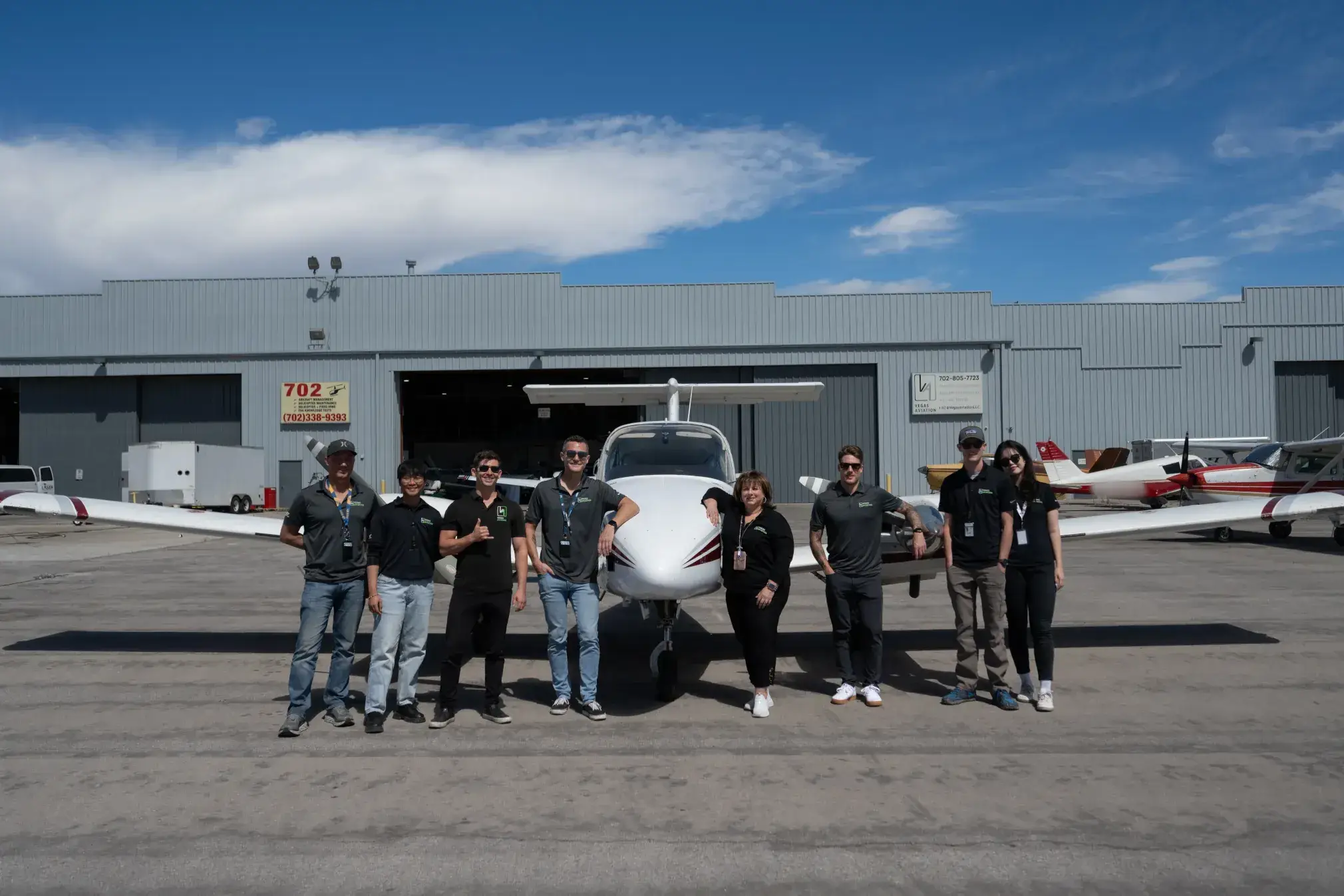
Vegas Aviation Certified Flight Instructor team supporting pilot training at North Las Vegas Airport

After earning the Private Pilot certificate, students pursuing additional capability can compare Instrument Rating training. Career-minded pilots can also review the later Commercial Pilot training stage and the complete flight training program path.

North Las Vegas Airport

Vegas Aviation is based at North Las Vegas Airport (KVGT). The airport location gives students a consistent home base for lessons, ground preparation, and enrollment support.

Certified Flight Instructors

The Vegas Aviation CFI team provides instruction from first lessons through advanced certificates and ratings. Lessons can be shaped around a student's experience, learning style, and training direction.

In-house fleet maintenance

We have an in-house maintenance team that supports the training fleet. Aircraft status and availability still require confirmation when lessons are scheduled.

Confirm current instructor and aircraft openings when you submit your preferred start window and weekly schedule.

Ask About Training at KVGT

Your Next Step

Prepare for Private Pilot Enrollment

Turn your flying plans into a specific enrollment conversation

Help our team understand your training needs by sharing the key details upfront. Include your contact information, prior experience, expected start date, preferred lesson frequency, and what you hope to achieve as a pilot, whether that means pursuing a career, flying recreationally, or exploring your options.

What to bring to the conversation

Be ready to discuss why you want the certificate, when you can train, and how you plan to fund continuity. Mention previous flight time, student pilot documentation, and medical progress if applicable.

  • Training direction
    Personal flying, travel, proficiency, or the first stage of a longer training path
  • Availability
    Days, times, and weekly frequency you can protect
  • Starting status
    Prior hours, knowledge-test progress, and medical status

What happens next

We review your request and consider which training structure fits your circumstances. Scheduling, rates, aircraft and instructor availability, and eligibility details are confirmed directly.

  • Request review
    We review your experience, start window, and preferred lesson frequency
  • Program discussion
    Confirm current pricing, scheduling, and required documents
  • Enrollment direction
    Review the onboarding steps that apply if you choose to proceed

Submit the details that shape your training plan and confirm current openings and enrollment requirements with our team.

Request Enrollment Follow-Up

Frequently Asked Questions

What are the FAA minimum hours for a private pilot airplane certificate under Part 61?
For an airplane single-engine rating, 14 CFR 61.109(a) requires at least 40 hours of flight time, including at least 20 hours of training from an authorized instructor and 10 hours of solo flight, with specified cross-country, night, instrument-reference, and practical-test preparation experience. Meeting the minimum hours does not by itself establish checkride readiness.
How much does private pilot training cost at Vegas Aviation?
The current site estimate is $17,285 for the listed 62 flight hours and 2 simulator hours. It is not a fixed quote. Read the PPL cost guide for informational cost questions, then check the pricing page and confirm current rates with the school.
How long does private pilot training take?
There is no universal completion calendar. Frequency, preparation, proficiency, weather, aircraft and instructor availability, medical timing, and examiner scheduling all affect the timeline.
Do I need previous flight experience to enroll?
No previous flight experience is required to begin private pilot training. If you already have logged time or completed ground study, include those details in your enrollment request so the school can discuss the appropriate starting point.
What is the next step after reviewing the program?
Submit the private pilot enrollment form with your goal, start window, weekly availability, prior experience, and medical status. The school can then confirm current pricing, availability, and the next applicable step.
Got any more questions? Contact Us

YOUR PILOT CAREER STARTS HERE

Take Off with Vegas Aviation

Experience personalized flight training with our instructors, they are passionate people dedicated to your success. Whether you're starting your first lesson or advancing your skills, Vegas Aviation offers a supportive community and expert guidance every step of the way.